






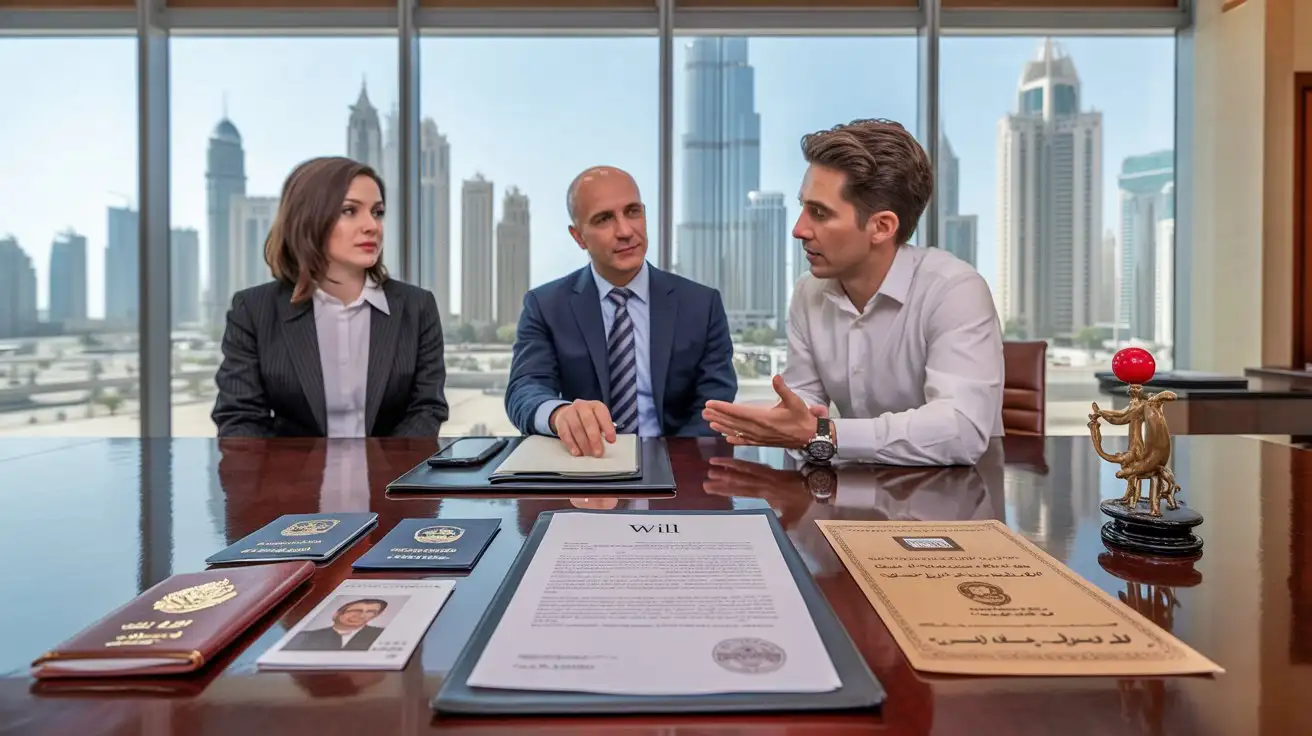
Will registration process for residents and expats in UAE
Many expats settling in the UAE or abroad own properties that they have invested in and plan to use in the future, either personally or as an asset. However, life is uncertain, and it becomes important to entrust these assets to someone dear or close to us. Will registration is the process that allows expatriates to document how their assets should be distributed, in accordance with Sharia law. This registration ensures that their assets and wishes are legally protected.
Will registration generally involves drafting, translating, and registering the will under the relevant court or authority. The testator is the individual who creates the will, while the beneficiaries are the individuals who receive the assets. The person responsible for overseeing the process and execution of the will is called the executor.
In the UAE, wills are mainly registered through Dubai Courts, Abu Dhabi Courts, DIFC, and ADGM. Additionally, the rules governing wills differ for Muslims and non-Muslims.
This comprehensive guide takes you through everything you need to know about wills in the UAE.
Muslim Will vs Non – Muslim Will in the UAE
Muslim will (sharia) | Non-Muslim will |
Muslim wills are generally based on Sharia principles under the UAE Personal Status Law. Fixed shares are allocated to certain relatives such as the spouse, children, parents, and sometimes siblings or more distant relatives. Male heirs typically receive twice the share of comparable female heirs. | Non-Muslim wills follow civil law principles, with the option to apply the testator’s home-country law or special expat rules. |
Freedom to choose distribution is limited. Only up to one-third of the net estate can be freely allocated to non-heirs or adjusted, and anything beyond this requires consent from the Sharia heirs. | The testator is usually free to decide how the estate is distributed, subject only to general public-order rules. |
Wills are primarily registered in onshore Sharia/civil courts such as ADJD and Dubai Courts. | Non-Muslim wills can be registered onshore (Dubai Courts, ADJD) or in common-law free zones like DIFC and ADGM, where wills are often drafted in English or bilingual and processed through their own probate procedures. |
Courts may recalculate distribution to ensure compliance with Sharia, even if a will is already in place. | Courts focus on validating the will and applying its terms according to the chosen legal framework. |
Factors involved in will registration
The key factors involved in will registration include
– Testator’s status
Testator eligibility must be at least 21 years of age, of sound mind and possess full legal capacity. For Muslims, inheritance is governed by Sharia law, while non-Muslims can choose to apply their home country’s laws through a registered will.
– Legal and Document Requirements
A valid will must include essential details such as:
- The testator’s full name, nationality, and ID/passport number
- A clear inventory of UAE assets (real estate, bank accounts, shares, etc.)
- Named beneficiaries and their respective shares
- Appointment of executors
- Guardianship details for minors, if applicable
For registration, documents must be translated into Arabic by a certified legal translator for onshore courts. DIFC accepts wills in English, while ADGM prefers bilingual formats.
– Execution formalities
Formalities demand that the will be written (typed or handwritten, not oral), signed by the testator in front of two adult witnesses who are not beneficiaries. In many cases, notarization is required to complete the process.
Also read: Best Notary service in UAE
Benefits of Will Registration
Control over Asset Distribution
Ensures your assets are distributed exactly as you intend, without ambiguity.
Protection of Family and Guardianship
Allows you to legally appoint guardians for minor children and protect dependent family members.
Smoother Probate and Reduced Delays
A registered will speeds up legal procedures, reducing disputes and court delays.
Asset and Business Continuity
Ensures smooth transition of business ownership, property management, and financial assets.
Legal Certainty and Peace of Mind
Provides clarity, minimizes conflicts among heirs, and ensures your wishes are legally enforceable.
Documents Required for Will Registration
Core Documents
Valid passport and Emirates ID of the testator, witnesses, executors, and beneficiaries
Recent passport-sized photographs of the testator
Will and Supporting Proofs
The drafted will document (original), clearly detailing all assets, beneficiaries, executors, and guardianship instructions
Proof of residence (such as Emirates ID, tenancy contract, or utility bill)
Witness and Executor Details
Copies of passports/Emirates IDs for two adult witnesses (must be non-beneficiaries and of sound mind)
Executor consent forms or passport copies if specific executors are appointed
Who Can Register a Will?
In the UAE, any testator who is 21 years or older can register a will.
Muslims generally follow Sharia principles through public notaries. For expatriates, the DIFC provides specific mechanisms for registering wills related to UAE assets.
Non-Muslims can register wills through DIFC, ADJD, ADGM, or Dubai Courts.
The will must comply with public-order requirements and meet all formalities, including signatures and witness eligibility.
Executors are usually spouses or close family members, provided they are adults with full legal capacity and have no disqualifying criminal record. When needed, the court may appoint an executor.
Why a Will Matters
A will ensures that your assets are passed on to the right people — even after your demise. Legal registration provides protection by ensuring your estate is handled according to your wishes, rather than default local laws.
For non-Muslim expats, registering a will with the DIFC Wills Service or the Abu Dhabi Judicial Department (ADJD) helps avoid the automatic application of Sharia-based inheritance rules or default local inheritance laws.
Also read: Why will registration matters?
Conclusion
Choosing the right type of will is essential to ensure your wishes are respected and your assets are protected. Although the process may seem complicated, selecting a reliable translation and legal support partner can make will registration significantly easier.
At Index Legal Translation, we provide clear guidance to help you determine the most suitable will structure and assist you through every step of the registration process, ensuring a smooth and hassle-free experience.
Other services we offer
Notary service
Attestation service
Translation service
Driving license service
Get your will registered with index legal translation.
Website: https://indexlegaltranslation.com
Phone: +971 26344715
Mail: indextarjum2006@gmail.com
Location: 9 شارع الخُورَة – Al Danah – Zone 1- Abu Dhabi, United Arab Emirates